

Reverse cash and carry arbitrage happens when the futures is at a discount to the spot price and is attractive even after you consider the cost of carry.
Cash and carry arbitrage is a financial arbitrage strategy that involves making the best of the anomalies in pricing, or mispricing as it is called.

Cash futures is quite simple. Reliance is trading at Rs.2100 in the cash market and at Rs.2118 in the 1-month futures. You buy Reliance in cash equivalent to the lot size and sell one lot of Reliance futures.
Arbitrage strategies are risk-free strategies to capitalize on price discrepancies. Here we look at different types of arbitrage trading strategies and the types of arbitrage strategies.
Arbitrage is about capitalizing on price differentials between markets while hedging is about reducing risk through offsetting positions.
In the media or news, there are always reports about one company being merged or bought by another rival company. Mergers and acquisitions are a fundamental part of a company’s business cycle.
Various assets are traded in high volume across different exchanges in India. However, due to market inefficiencies and differential demand-supply
The arbitrageur in stock market is a very critical link between asset prices and helps to equalize them across markets or at least synchronize the prices.
Macro arbitrage is quite popular among arbitrage traders, especially higher risk players like hedge funds. Arbitrage trading is not just about cash-futures or exchange to exchange trading.
Reverse cash and carry arbitrage happens when the futures is at a discount to the spot price and is attractive even after you consider the cost of carry.
Cash and carry arbitrage is a financial arbitrage strategy that involves making the best of the anomalies in pricing, or mispricing as it is called.

Cash futures is quite simple. Reliance is trading at Rs.2100 in the cash market and at Rs.2118 in the 1-month futures. You buy Reliance in cash equivalent to the lot size and sell one lot of Reliance futures.
Arbitrage strategies are risk-free strategies to capitalize on price discrepancies. Here we look at different types of arbitrage trading strategies and the types of arbitrage strategies.
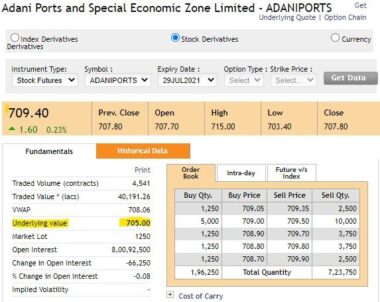
At a conceptual level, arbitrage is the anomalies in pricing. In the good old days of the NSE and BSE, there used be huge price differences between the two exchanges and even with the regional exchanges.
One of the most common activity in the stock market is arbitrage. Let us first understand what is arbitrage and the actual arbitrage definition.



Click icons above to download App for Android or iOS


 IIFL Customer Care Number
(Gold/NCD/NBFC/Insurance/NPS)
1860-267-3000 / 7039-050-000
 IIFL Capital Services Support WhatsApp Number
+91 9892691696
Download The App Now


Follow us on


2026, IIFL Capital Services Ltd. All Rights Reserved

IIFL Capital Services Limited - Stock Broker SEBI Regn. No: INZ000164132 (Member ID - NSE: 10975 BSE: 179 MCX: 55995 NCDEX: 01249), DP SEBI Reg. No. IN-DP-185-2016, PMS SEBI Regn. No: INP000002213, IA SEBI Regn. No: INA000000623, Merchant Banker SEBI Regn. No. INM000010940, RA SEBI Regn. No: INH000000248, BSE Enlistment Number (RA): 5016, AMFI-Registered Mutual Fund Distributor & SIF Distributor
ARN NO : 47791 (Date of initial registration – 17/02/2007; Current validity of ARN – 08/02/2027), PFRDA Reg. No. PoP 20092018, IRDAI Corporate Agent (Composite) : CA1099

This Certificate Demonstrates That IIFL As An Organization Has Defined And Put In Place Best-Practice Information Security Processes.